
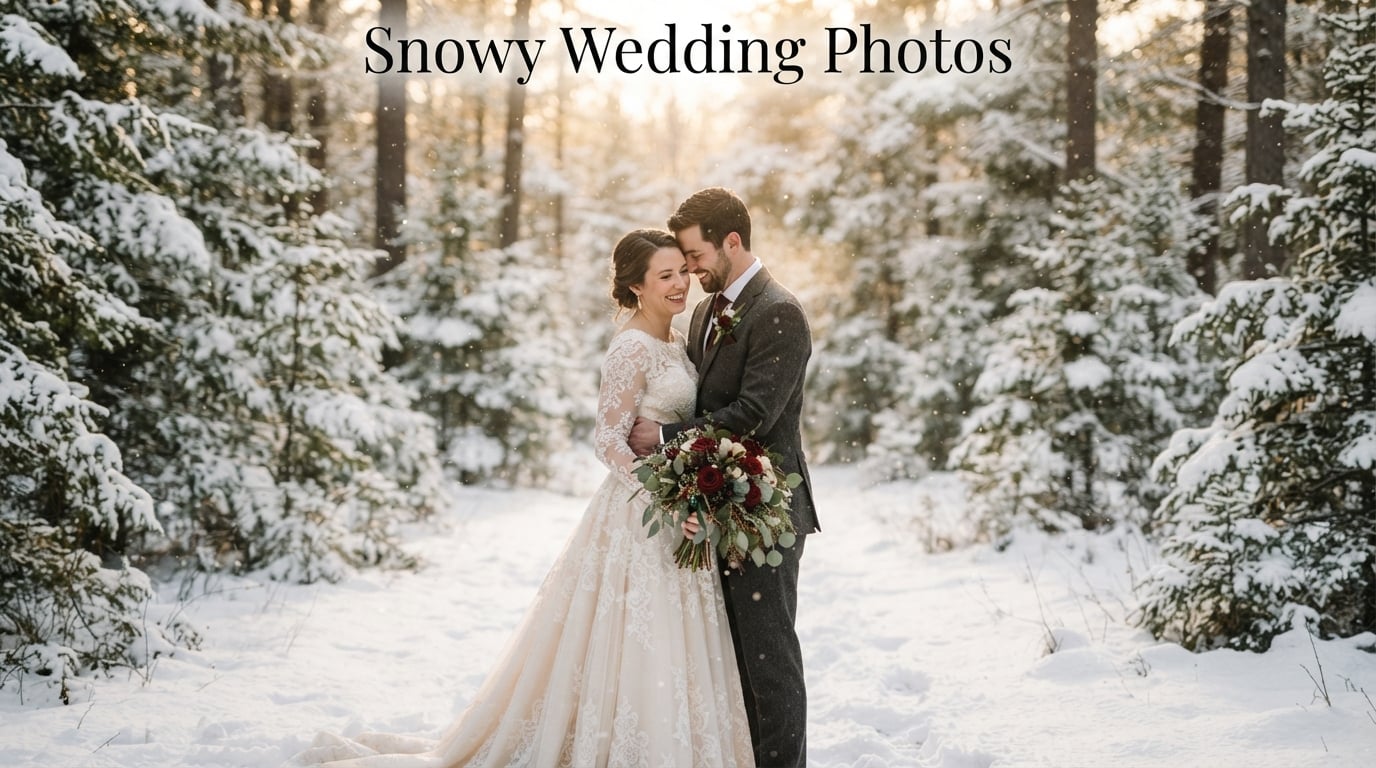
Snowy wedding photos are professional photographs taken during winter when fresh snow creates a soft, white backdrop that transforms ordinary wedding imagery into something straight out of a fairy tale. I have spent the last eight winters photographing weddings across mountain towns and frozen forests, and I can tell you with full confidence: a snowy wedding scene produces images that simply cannot be replicated in any other season.
The crisp texture of fresh powder, the way breath turns to mist in cold air, and the muted light bouncing off white landscapes all combine to create an atmosphere that feels both intimate and epic at the same time. In this guide, I will walk you through everything our team has learned about capturing unforgettable snowy wedding photos, from timing your shoot with the winter sun to keeping the couple comfortable when temperatures drop below freezing.
Whether you are a couple planning a winter wedding or a photographer looking to expand your winter portfolio, this guide gives you the techniques, gear recommendations, and creative ideas we use on real shoots every single season.
Table of Contents
When to Shoot Snowy Wedding Photos for the Best Light
Timing is everything when you are chasing the perfect snowy wedding photos. Winter daylight is precious, and the few hours we get often determine whether the gallery looks magical or muddy.
Golden hour in winter happens fast, usually between 2:30pm and 4:00pm in most northern locations. The sun sits low on the horizon, casting warm amber tones across the snow that balance beautifully with the cool blue shadows. I aim to have the couple in position about 30 minutes before peak golden light so we are not rushing.
Blue hour, the period right after sunset, gives us a deep blue sky that contrasts incredibly with snow. If you are willing to brave the cold for 15 extra minutes, blue hour snowy wedding photos look otherworldly.
Midday shoots in winter are tricky. The sun sits low enough that harsh shadows rarely become a problem, but the light can look flat and gray if clouds roll in. On overcast days, I switch to focusing on texture and detail shots: footprints in fresh snow, breath freezing mid-air, and close-ups of the couple’s hands wrapped around a thermos.
Daylight savings time throws a wrench into winter schedules. Once we fall back in November, sunset can hit as early as 4:15pm in some regions. I build every winter timeline around the actual sunset time, not the clock, and I recommend couples plan their ceremony and portraits to end at least 90 minutes before that sunset.
Top Locations for Snowy Wedding Photography
The location you choose sets the entire mood for your snowy wedding photos. Over the years I have shot in everything from alpine peaks to downtown city streets, and each setting brings its own personality.
Mountain and Alpine Settings
Snow-covered peaks and ridgelines turn a simple couple portrait into something much larger than itself. Wide-angle shots with mountain backdrops always make my couples feel like the hero of an epic adventure film. The elevation also means fresher snow that stays powdery and clean throughout the shoot.
Urban Winter Locations
City streets dusted with snow have a quiet, cinematic quality. Brick buildings, glowing street lamps, and bare tree branches create natural leading lines. I have shot snowy wedding photos in downtown areas that look like stills from a romantic movie set.
Forests and Evergreen Groves
Pine and fir trees dusted in white snow create instant depth in any composition. The dark green needles provide contrast against the white backdrop, and the trees act as natural windbreaks, which means snow falls more gently around the couple.
Frozen Waterfalls and Lakes
These are my secret weapons. A frozen waterfall behind the couple adds drama without distracting from them. Frozen lake surfaces, when safe to walk on, provide mirror-like reflections that double the visual impact of every shot.
How to Capture Falling Snow in Wedding Photos
Falling snow is what separates a regular winter photo from a true snowy wedding photo. Getting those visible snowflakes requires specific technique.
Shutter speed is your best friend. I use a shutter speed of 1/200s or faster to freeze individual snowflakes in mid-air. Slower speeds turn snowflakes into white streaks, which can be artistic, but for that crisp, magical snowfall look, fast shutter speeds win every time.
Background contrast makes snowflakes visible. Pure white snow on a white sky means your snowflakes disappear. I always position the couple so the background behind them is darker, whether that is evergreen trees, a building, or mountains. The snowflakes then pop against that darker backdrop.
Flash photography in snow needs care. Direct flash on falling snow creates bright white blobs. I bounce my flash off a ceiling or use a diffuser when shooting indoors with snowy windows. Outdoors, I rely on natural light whenever possible and only add flash for fill.
Color and Wardrobe Ideas for Snowy Wedding Photos
Color is where snowy wedding photos go from good to breathtaking. The white backdrop is essentially a blank canvas, and the colors you choose either sing or disappear.
Bold Pop Colors
Deep emerald green, burgundy, mustard yellow, and rich navy blue all pop against snow without clashing. I have seen brides carry emerald bouquets in snowstorms, and the photos looked like Renaissance paintings.
Soft Romantic Tones
Blush pink, dusty rose, lavender, and cream create a softer, more romantic palette. These colors work especially well for couples who want a winter wonderland aesthetic without dramatic contrast.
Avoid These Colors
Pure white gowns against pure white snow can make the bride blend into the background. Most wedding dresses have enough beading or texture to stand out, but if you are worried, adding a colored sash, cape, or fur shawl solves the problem instantly.
Fabric Choices
Heavy fabrics photograph beautifully in snow. Velvet, wool, faux fur, and thick satin all hold shape and add visual weight. Lightweight chiffon and organza can look limp in still winter air and may show every gust of wind.
How to Keep Couples Warm During Snowy Wedding Photo Sessions
Cold couples do not give good photos. Shivering, tense shoulders, and chattering teeth ruin even the most perfectly timed shot. Keeping the couple comfortable is half the job of any winter wedding photographer.
Hand and Body Warmers
I keep a stash of chemical hand warmers in my camera bag all winter. I tuck them into pockets and offer them between shots. Cheap, simple, and they work.
Hot Drinks On Set
A thermos of hot chocolate, mulled wine, or spiced cider does double duty. It warms the couple from the inside and gives them something to do with their hands during posed shots. Bonus: steaming mugs look incredible in snowy wedding photos.
Movement Breaks
I schedule 2-minute movement breaks every 15 minutes. We walk, jump, spin, do a few silly dances. Movement generates body heat and loosens stiff shoulders, and the candid photos from these breaks are usually the favorites.
Layering Strategy
I always recommend brides bring a stylish coat or cape for in-between shots. The same applies to grooms. Looking good in photos means staying warm enough to relax, and a 30-second coat break during a scene change costs nothing.
Camera Settings and Equipment for Snowy Wedding Photos
This is the section I wish someone had written for me eight winters ago. Snow photography has unique technical challenges that trip up even experienced photographers.
Exposure Compensation: The Snow Rule
Snow confuses camera meters. Your camera sees all that bright white and tries to make it gray, leaving your snowy wedding photos looking dull and underexposed. The fix is simple: dial in +1 to +2 stops of exposure compensation.
I start at +1.3 and adjust based on the scene. Bright sun on snow needs more compensation (+1.7 to +2). Overcast snow needs less (+0.7 to +1). Check your histogram as you shoot and make sure you are not clipping the highlights.
White Balance for Snow
Auto white balance often adds a blue cast to snow scenes. I shoot in RAW and adjust white balance in post, but if you are shooting JPEG, set your white balance to “Cloudy” or “Shade” to add warmth. This small change makes snow look clean and crisp instead of icy and cold.
ISO Considerations
Winter means less light, which means higher ISO. I try to stay at ISO 800 or below for clean files. When the light drops and I need to push to ISO 1600 or 3200, modern full-frame cameras handle it well, but expect some grain. I embrace a little grain in winter photos because it adds atmosphere.
Condensation Prevention
Moving a cold camera into a warm venue causes condensation on the lens and sensor. I keep my camera in its bag for 20 to 30 minutes when transitioning between temperatures. Some photographers seal their gear in plastic bags before coming indoors, which slows the temperature change and prevents fogging.
Lens Choices
I bring three lenses to every snowy wedding: a 35mm prime for wide environmental portraits, an 85mm prime for intimate close-ups, and a 70-200mm zoom for ceremony shots from a distance. Fast apertures (f/1.8 to f/2.8) help in low winter light.
Creative Pose Ideas for Snowy Wedding Photos
Once the technical side is handled, the fun begins. The best snowy wedding photos come from moments that feel alive, not stiff.
Interactive Activities
Snowball fights, building snowmen together, and writing messages in fresh snow all generate natural laughter and movement. I direct couples to throw a pretend snowball first, then a real one, and capture both the posed version and the reaction.
Candid Walking Shots
I ask couples to walk slowly toward me through fresh snow, holding hands. The sound of crunching snow, their breath visible in the cold air, and the slightly self-conscious smiles all combine into something genuine.
Intimate Close-Ups
When the cold gets serious, we move in close. Forehead-to-forehead poses, hands wrapped around each other, breath freezing in the space between them. These shots carry emotional weight and require only a 50mm or 85mm lens.
Snow Angels
Yes, snow angels. I have shot three couples who made snow angels in their wedding attire, and those photos became their most shared images. It is silly, romantic, and uniquely winter.
Proposal Recreation
Couples who got engaged in winter often return to the same spot for their snowy wedding photos. Recreating the proposal moment, complete with the original outfit if possible, makes for deeply personal gallery highlights.
Common Challenges of Snowy Wedding Photos and How to Solve Them
Winter photography is not without headaches. Here are the problems I run into most often and the solutions I rely on.
Limited Daylight Hours
In many regions, the sun sets before 5:00pm from November through February. I plan winter timelines backward from sunset, scheduling the ceremony two hours before and portraits immediately after. For night shots, I scout indoor venues with large windows where we can shoot by available light.
Equipment Issues in Extreme Cold
Batteries drain faster in cold weather. I carry three to four spare batteries in an inside pocket close to my body heat. Lens fogging happens constantly, so I keep microfiber cloths in every pocket. Plastic bags for rain protection also help insulate gear during heavy snow.
Grainy Photos From High ISO
When I have to shoot at ISO 3200 or higher, I lean into the grain. A little film-like texture suits winter photography and adds mood. For portraits where skin needs to look smooth, I use noise reduction software like Topaz DeNoise or Lightroom’s AI denoise in post.
Unpredictable Weather
Snowstorms can shift plans in minutes. I always build backup indoor locations into every winter timeline. Coffee shops with big windows, hotel lobbies with good light, and covered porches all work when the weather turns.
FAQs
How do you have a snowy wedding?
Plan your wedding date during peak snow season (December through February in most regions), choose a venue that handles winter weather, build a timeline around the early sunset, and prepare backup indoor locations in case of storms. Book a photographer experienced in winter conditions and invest in cold-weather accessories for you and your wedding party.
What is the best color to wear to a winter wedding?
Deep jewel tones like emerald, burgundy, sapphire, and plum create beautiful contrast against snow. For a softer palette, blush, dusty rose, and cream work well. Avoid pure white or ivory outfits for guests since the bride should stand out, and consider velvet or wool fabrics that hold their shape in cold weather.
What are the challenges of a winter wedding?
The biggest challenges include limited daylight (sunset as early as 4:15pm in northern regions), unpredictable weather requiring backup plans, cold temperatures that affect comfort and equipment, higher travel costs for guests, and potential venue accessibility issues during heavy snow. Planning ahead with flexible timelines and indoor backups solves most of these problems.
What are the colors for winter wedding flowers?
Winter wedding flowers look stunning in deep burgundy, white, evergreen, eucalyptus, pinecones, and silver or gold accents. Seasonal blooms like amaryllis, paperwhites, ranunculus, and hellebores add elegance. Pair white roses with deep red dahlias and frosted greenery for a classic winter palette that photographs beautifully against snow.
What camera settings work best for snowy wedding photos?
Use exposure compensation of +1 to +2 stops to prevent snow from looking gray, set white balance to Cloudy or Shade for warmer tones, keep shutter speed at 1/200s or faster to freeze falling snowflakes, and stay at ISO 800 or below when possible. Shoot in RAW format for maximum flexibility in post-processing snow scenes.
How do photographers keep couples warm during snowy photos?
Professional photographers carry chemical hand warmers, offer hot drinks from a thermos, schedule 2-minute movement breaks every 15 minutes to generate body heat, and recommend stylish coats or capes for transitions between locations. Movement-based activities like walking and snowball fights also keep blood flowing and create natural candid photos.
Plan Your Snowy Wedding Photos With Confidence
Snowy wedding photos are about more than cold weather and white backgrounds. They are about capturing a season that turns ordinary moments into memories you will talk about for decades. I have watched couples shiver through 20-minute sessions and then cry when they see the final gallery, every single time.
Start by picking a date during peak snow season, choose a location that matches the mood you want, and work with a photographer who actually enjoys winter shoots. Layer up, embrace the cold, and trust the process. The photos you get will be worth every shiver.
If you are ready to plan your winter wedding photography or want to talk through location ideas, our team at Kingdom Wedding Photography would love to hear from you.