
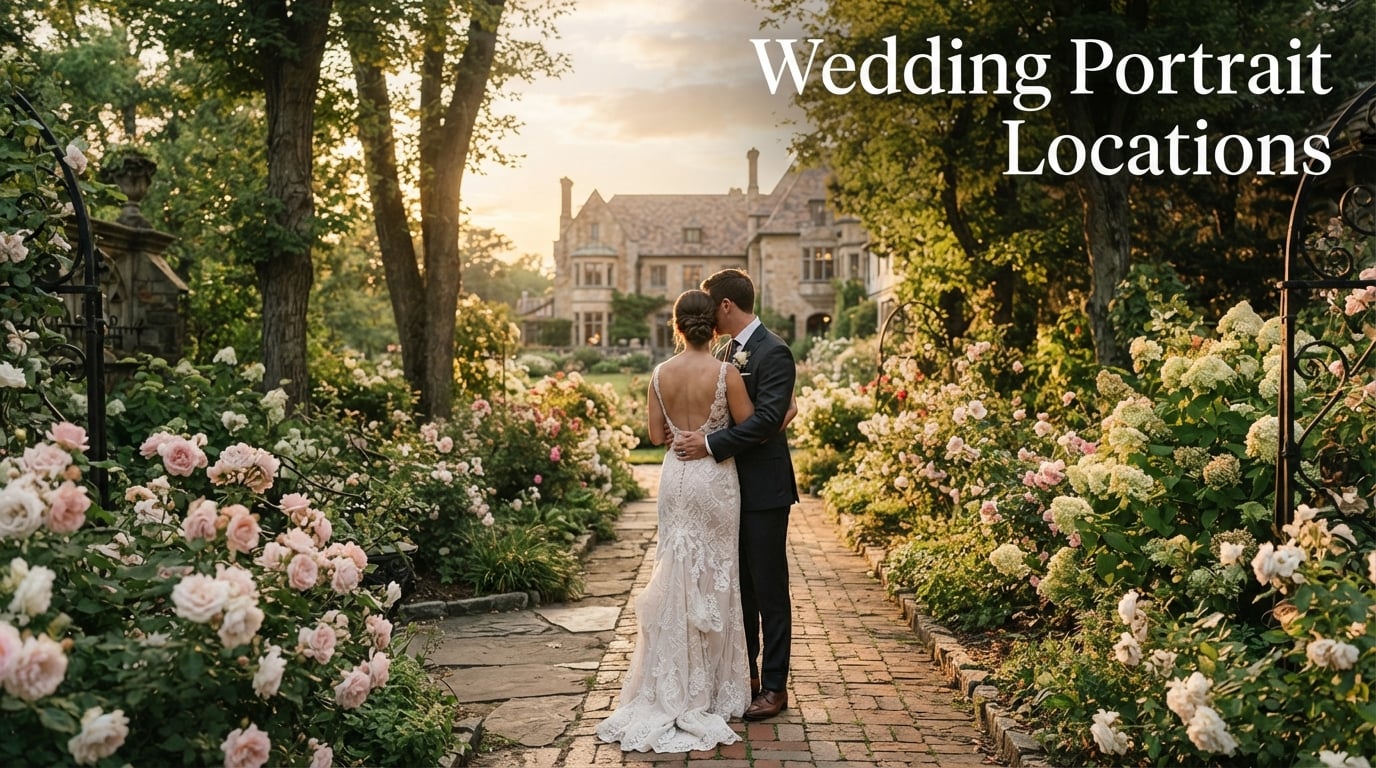
Finding the right wedding portrait locations can make or break the photos you will look back on for the rest of your life. The spot where you stop for portraits decides the light, the backdrop, the mood, and even how relaxed you feel in front of the camera.
Our team has shot weddings in parks, on rooftops, beside lakes, and inside centuries-old buildings. Every location taught us something about what actually works on a wedding day versus what just looks good on paper. This guide pulls together what we have learned so you can choose with confidence.
We will walk through the key factors that separate a forgettable backdrop from a stunning one, the most popular types of wedding portrait locations, seasonal timing guidance, and the logistics that often get overlooked until it is too late. By the end, you will have a clear framework for picking the perfect spot for your wedding day portraits.
Table of Contents
What Makes a Wedding Portrait Location Work
A great wedding portrait location works because three things line up at once: the light flatters your faces, the backdrop complements your wedding style, and the logistics do not eat into the rest of your day. When any one of these is off, the photos suffer even if the location looked perfect in a Pinterest post.
Photographers often talk about a location having “good bones.” That means it offers natural shade, multiple angles to shoot from, and visual variety within a short walking distance. A spot with a single pretty wall and nothing else nearby limits how many distinct images you can walk away with.
Crowd control matters more than most couples expect. A location that is breathtaking at 6 a.m. on a Tuesday can be unshootable at noon on a Saturday. We have watched couples lose thirty minutes of golden hour to tourists who wanted to be in every frame. The best wedding portrait locations are the ones you can actually use when you need them.
Finally, a location should feel like it belongs to you. The most memorable portraits we have taken were in spots that meant something to the couple, whether that was the park where they got engaged or the downtown block where they had their first date. A meaningful location almost always produces more authentic expressions than a generic scenic overlook.
Key Factors to Consider When Choosing a Location
When couples ask us how to choose a wedding portrait location, we always start with the same short list. Light, backdrop, and logistics. Get those three right and the rest tends to fall into place.
Lighting and Time of Day
Light is the single most important factor in any portrait. The soft, warm glow of golden hour, the hour after sunrise and the hour before sunset, is what most photographers chase. It wraps faces in flattering tones and adds depth that harsh midday sun simply cannot match.
If your wedding timeline forces portraits into the middle of the day, look for locations with solid shade. Tree canopies, building shadows, and covered walkways all soften the contrast that makes skin look shiny and shadows look harsh. Open shade is your friend when golden hour is not an option.
Overcast days are often underrated. A cloudy sky acts like a giant softbox, giving you even, diffused light that works in almost any direction. We have shot some of our favorite portraits on days couples initially worried would be “too gray.”
Backdrop and Visual Variety
A strong backdrop does two jobs at once. It frames you as the subject, and it adds context without competing for attention. Look for locations that offer at least three distinct looks within a five-minute walk, so your gallery does not feel like one photo repeated thirty times.
Texture is what separates a good backdrop from a great one. Brick walls, weathered wood, flowering hedges, marble columns, and rippling water all add visual interest without overpowering the people in front of them. Smooth, featureless walls tend to flatten portraits and make couples look pasted onto a blank page.
Consider how your wedding colors and attire will interact with the setting. A bold floral dress pops against neutral stone, while soft pastels can disappear into a busy garden. Your photographer can help you predict these interactions before the wedding day.
Logistics and Travel Time
Logistics is where beautiful plans fall apart. Every minute spent driving between locations is a minute taken from your reception, your guests, or your portrait session itself. We tell couples to budget at least twenty minutes of buffer for any move, including loading the wedding party, parking, and walking to the actual spot.
Parking is the hidden killer of portrait timelines. Downtown locations and popular parks often have limited parking, paid lots, or permit-only street spaces. Scouting parking ahead of time is one of the simplest ways to protect your schedule.
Accessibility deserves real attention. If grandparents or guests with mobility concerns will be part of the portraits, steep trails, rocky paths, and staircases-only access can exclude them. There are stunning locations that are also wheelchair and stroller friendly, and worth prioritizing when they matter to your group.
Popular Types of Wedding Portrait Locations
Wedding portrait locations fall into a handful of broad categories, each with its own strengths and trade-offs. Knowing the category helps you narrow down quickly and communicate your vision to your photographer.
Outdoor and Nature Settings
Outdoor locations are the most popular choice for wedding portraits, and for good reason. Natural light, open space, and changing seasons give you images that feel alive. Mountains, meadows, forests, and deserts each offer a distinct mood that suits different wedding aesthetics.
Nature settings shine brightest during golden hour and shoulder seasons. A mountain vista at sunset or a forest path blanketed in autumn leaves can produce gallery-worthy portraits without any props or staging. The trade-off is exposure to weather, insects, and uneven terrain.
Reddit photographers consistently recommend spots like Lakeshore State Park in Milwaukee for skyline-meets-nature views, and Bull Creek Park in Austin for shaded water features. The common thread is locations that combine natural beauty with a usable, level shooting area.
Urban and Architectural Spaces
City locations bring energy, texture, and a sense of place that rural settings cannot match. Brick alleys, cobblestone streets, modern glass facades, and historic storefronts all create backdrops with personality. Urban portraits tend to feel editorial and contemporary.
The payoff is variety within a small radius. You can often walk three blocks and capture five completely different looks, which keeps your gallery dynamic. The challenge is foot traffic, traffic noise, and permits for shooting on public streets or in front of private buildings.
Downtown cores, museum exteriors, and historic districts are the workhorses of urban wedding photography. The Cleveland Museum of Art gardens and the 33rd Street Bridge area in Pittsburgh are both real recommendations pulled from local photographer forums, praised for combining architectural interest with manageable crowds.
Gardens, Parks, and Estates
Formal gardens and estates offer curated beauty, controlled environments, and reliable backdrops. Think rose gardens, botanical conservatories, plantation grounds, and historic libraries with manicured lawns. These venues are designed to be photographed, which is both their strength and their limitation.
The predictability is a major advantage. A botanical garden will look good in almost any season, with staff maintaining plantings and pathways year-round. The trade-off is that many require permits, entrance fees, or advance reservations, and popular spots book up months ahead during peak wedding season.
Reddit couples rave about the Rockefeller Greenhouse in Cleveland, the UT Campus and Zilker Botanical Garden in Austin, and Mellon Park in Pittsburgh. Each offers a mix of formal gardens and architectural details within a single visit.
Waterfront and Scenic Vistas
Water adds movement, reflection, and a sense of calm that few other elements can match. Lakes, rivers, beaches, and harbors all produce portraits with a distinct emotional quality. Sunsets over water are among the most requested setups we hear from couples.
Beaches are gorgeous but logistically demanding. Sand gets everywhere, wind can whip hair and veils, and tides dictate what is accessible. Lakeshores and riverbanks tend to be calmer and offer more predictable conditions. Montrose Beach in Chicago is a forum favorite because it combines skyline, lake, and green space in one spot.
Scenic overlooks and hilltop vistas deliver drama but require planning for parking, safe footing, and crowd management. Mount Bonnell in Austin is a classic example, offering panoramic views that work best at sunrise or just before sunset when tourist traffic drops.
Indoor and Venue Spaces
Indoor locations are the unsung heroes of wedding portrait locations. They offer climate control, consistent lighting, and shelter from weather that would cancel an outdoor shoot. Historic hotels, libraries, museums, and industrial lofts all deliver striking indoor backdrops.
Window light is the secret weapon of indoor portraits. Large north-facing windows produce soft, directional light that flatters skin and adds dimension. If your venue has tall windows and high ceilings, you may not need to leave the building at all.
Indoor options are also the obvious choice for weather backup plans. Having a venue with strong interior spaces means rain or extreme heat does not destroy your portrait timeline. We always scout indoor alternatives during our venue walkthroughs for exactly this reason.
Seasonal and Timing Guidance
The season you marry in shapes every location decision you make. A garden that is breathtaking in May can be brown and bare in February, and a sunny overlook that shines in October may be sweltering and hazy in July. Timing your portraits to match the season is one of the highest-leverage decisions in your planning process.
Spring brings fresh blooms and mild temperatures, making gardens and parks especially photogenic. The risk is unpredictable weather, so always have an indoor backup. Summer offers long days and lush greenery, but midday heat and harsh sun push the best portraits to early morning or late evening.
Fall is widely considered peak wedding portrait season. The color palette is unmatched, the light is warm, and the weather is often cooperative. Book popular outdoor locations well ahead, because fall weekends fill up fast. Winter portraits can be striking, with bare branches, dramatic skies, and cozy indoor settings, though outdoor sessions require shorter windows and warm layers.
Within any season, the time of day matters as much as the date. Schedule your couple portraits for the last ninety minutes before sunset whenever possible. If your timeline will not allow it, plan for a first look earlier in the day so you can capture portraits in better light than a post-ceremony rush would permit.
Weekday weddings and portrait sessions dodge weekend crowds at nearly every popular location. If you have flexibility, a Thursday or Friday session at a heavily trafficked spot can mean the difference between private portraits and a constant stream of onlookers.
Working With Your Photographer
Your photographer is your single best resource for wedding portrait locations. They have likely shot dozens or hundreds of sessions in your area, know which spots deliver and which disappoint, and can match a location to your personal style in a way no blog list can.
Share your vision early. Send inspiration images, but focus on the feeling you want rather than exact replicas. A good photographer will translate that feeling into locations that actually work for your wedding day, your timeline, and your region. Trying to recreate a specific shot from another city often leads to disappointment.
Ask for a location scouting visit. Many photographers include this in their packages or offer it for a small fee. Walking a location together before the wedding day reveals parking options, backup spots, and the small details, like a construction zone or a tree that was removed last month, that only a site visit can catch.
Trust your photographer’s judgment on timing. They know how long it takes to move a wedding party, when the light will peak, and which locations age well in poor weather. Couples who micromanage the timeline almost always end up with fewer usable portraits than couples who let their photographer protect the shooting windows.
Finally, be honest about constraints. If budget is tight, say so. Free and low-cost locations exist in nearly every city, and Reddit threads in r/WeddingPhotography and local city subreddits are full of couples and photographers sharing hidden gems. Your photographer would rather work within a budget than discover it the day of the wedding.
Logistics, Permits, and What to Bring
The practical details of wedding portrait locations are what separate smooth sessions from stressful ones. Permits, weather plans, and a simple packing list can save your shoot before it ever starts.
Permits and Permissions
Many public parks, beaches, gardens, and historic sites require photography permits for portrait sessions, especially for wedding parties. Permit rules vary widely by location, with some venues needing nothing, others charging a small fee, and a few requiring proof of insurance or weeks of lead time.
Check permit requirements as soon as you shortlist a location, not the week of the wedding. Popular botanical gardens and estates often book months ahead, and showing up without a permit can mean being turned away at the gate. Your photographer can usually handle permit paperwork or point you to the right office.
Private property deserves the same respect. A picturesque storefront or restaurant patio may look inviting, but shooting there without permission risks being asked to leave mid-session. A quick phone call ahead of time almost always secures access.
Weather Backup Plans
Weather is the one variable no amount of planning can fully control. The couples who end up with great portraits despite rain, wind, or heat are the ones who planned a backup before they needed one.
For every outdoor location you choose, identify an indoor alternative within a short drive. Historic hotels, museum lobbies, covered bridges, and your own reception venue all qualify. Share the backup with your photographer and your wedding party so a pivot does not create confusion.
Rain is not always a reason to move indoors. Some of the most romantic wedding portraits happen under umbrellas, with reflections in puddles and soft overcast light. If your photographer is comfortable shooting in light rain and you have the right gear, embracing the weather can produce images no sunny session could.
Extreme heat and cold are harder to embrace. In summer, plan for shaded locations, hydrate, and schedule portraits for early morning. In winter, choose locations with quick indoor access, build in warm-up breaks, and keep portraits sessions shorter than you would in mild weather.
What to Bring Checklist
A small kit can rescue a portrait session. Here is what we recommend couples bring, based on years of sessions that taught us what actually matters.
Touch-up kit with lipstick, powder, and pins for quick fixes between shots
Bottle of water and light snacks, portraits take energy and dehydration shows on camera
Comfortable walking shoes you can change into between locations
Small umbrella or clear poncho for unexpected weather shifts
Hand warmer or cooling towel depending on the season
Copy of any permits or reservation confirmations for venues that require them
Emergency contact list including your photographer and venue coordinator
Backup outfit or accessories if you want a wardrobe change mid-session
This list looks long, but it fits in a single tote bag. Hand it to a bridesmaid or groomsman so your hands stay free and your mind stays on the moment.
FAQs
What are the best locations for wedding portraits?
The best wedding portrait locations offer soft natural light, a flattering backdrop, and manageable logistics. Popular choices include botanical gardens, historic estates, urban architectural spaces, waterfronts, and scenic overlooks. The right spot depends on your wedding style, season, and how much time you have between ceremony and reception.
How do I choose a wedding portrait location?
Start by listing three priorities: the mood you want, your timeline, and your budget. Then evaluate each candidate against lighting, backdrop variety, travel distance from your venue, parking, permits, and accessibility. Walk the location with your photographer before the wedding day to confirm it delivers what you expect.
What should I consider when selecting a wedding photo location?
Consider lighting and time of day, backdrop variety, travel time and parking, permit requirements, crowd levels at the time you will shoot, weather backup options, and accessibility for all members of your wedding party. A site visit with your photographer is the most reliable way to assess all of these at once.
How many locations should I use for wedding portraits?
Most couples do best with one to three locations on the wedding day. Each additional spot adds travel time, logistics, and risk. For engagement or bridal sessions scheduled separately, two locations is usually the sweet spot for variety without exhaustion.
How long should I allow for wedding portrait photos?
Allow at least thirty to forty-five minutes for couple portraits alone, and add time for wedding party and family formals. If you are traveling between locations, budget an additional twenty minutes of buffer per move. A first look can free up portrait time earlier in the day when the light is more forgiving.
Bringing It All Together
Choosing wedding portrait locations does not have to be overwhelming. Start with light, backdrop, and logistics. Pick a category that fits your wedding style. Time your session to the season and the golden hour. And lean on your photographer for scouting and judgment calls.
The best wedding portrait locations are the ones that feel like yours, work within your timeline, and give your photographer the conditions they need. Get those three things aligned and the photos will follow. If you are ready to start scouting, share your shortlist with your photographer and book a walkthrough before the big day arrives.