
The best mirrorless cameras under 1,000 dollars are the Canon EOS R50, the Sony Alpha a6400 and the Panasonic Lumix G85. The R50 is the one we recommend most often: a 24.2MP APS-C sensor, subject-detection autofocus that tracks people and animals, and 6K oversampled 4K video, all in a body small enough to carry every day.
One thing to settle before you read on: a 1,000-dollar budget rarely buys a body and a good lens together. Several picks on this list are body-only, so you will spend a meaningful part of the budget on glass. Where a kit lens is included, we say so, and where it is not, we say that too.
We spend our working days photographing weddings and events, which shapes what we look at in a body. Autofocus that misses a moving subject costs you a moment you cannot get back, battery endurance matters across a ten-hour day, and a body that is pleasant to hold at hour nine matters more than most spec sheets admit. We also track what buyers report back after living with these cameras, because the review pattern for each of these models is unusually consistent.
Below we cover 12 bodies that fit the budget, what each one does well, and honestly who should skip it. If you shoot events regularly, our guide to the best mirrorless cameras for wedding photographers goes deeper on the endurance and dual-slot side of things.
Table of Contents
Top 3 Mirrorless Camera Picks Under $1000 for October 2026
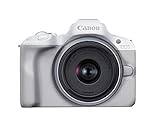
Canon EOS R50 Mirrorless Camera
- 24.2MP APS-C sensor
- Dual Pixel AF II with 651 zones
- 6K oversampled 4K video
- Includes 18-45mm kit lens

Sony Alpha a6400 Mirrorless Camera
- 20.1MP APS-C sensor
- Real-Time Eye AF
- 11 fps burst
- 180-degree tilt screen

Panasonic Lumix G85 Mirrorless Camera
- 16MP Micro Four Thirds sensor
- 5-axis dual image stabilization
- Weather-sealed body
- 12-60mm stabilized lens
All 12 Mirrorless Cameras Compared in October 2026
Every camera below sits inside the same budget, but they are not interchangeable. The Canon RP is the only full-frame option here, the two Micro Four Thirds bodies give you the longest stabilized reach, and the Sony and Canon APS-C options lead on autofocus. This table is the fast way to see the split before reading the individual entries.
| Product | Specifications | Action |
|---|---|---|
| Canon EOS R50 with 18-45mm Lens |
|
Check Latest Price |
| Sony Alpha a6400 with 16-50mm Lens |
|
Check Latest Price |
 Sony ZV-E10 Body Sony ZV-E10 Body |
|
Check Latest Price |
| Panasonic Lumix G85 with 12-60mm Lens |
|
Check Latest Price |
 Canon EOS RP Body Canon EOS RP Body |
|
Check Latest Price |
 OM System OM-D E-M10 Mark IV OM System OM-D E-M10 Mark IV |
|
Check Latest Price |
 Canon EOS M50 Renewed with 15-45mm Lens Canon EOS M50 Renewed with 15-45mm Lens |
|
Check Latest Price |
 Nikon Z 30 with 16-50mm Lens Nikon Z 30 with 16-50mm Lens |
|
Check Latest Price |
 Sony Alpha a6100 Body Sony Alpha a6100 Body |
|
Check Latest Price |
 Nikon Z 50 with 16-50mm Lens Nikon Z 50 with 16-50mm Lens |
|
Check Latest Price |
 Canon EOS R100 with 18-45mm Bundle Canon EOS R100 with 18-45mm Bundle |
|
Check Latest Price |
 Fujifilm X-M5 with 15-45mm Lens Fujifilm X-M5 with 15-45mm Lens |
|
Check Latest Price |
1. Canon EOS R50 – The Best Mirrorless Camera Overall Under 1,000 Dollars
Canon EOS R50 Mirrorless Camera RF-S18-45mm F4.5-6.3 is STM Lens Kit, 24.2 Megapixel CMOS (APS-C) Sensor, 4K Video, Hybrid Camera, Photo and Video, Vlogging, Content Creator, RF Mount, White
24.2MP APS-C CMOS
Dual Pixel AF II, 651 zones
6K oversampled 4K30
Includes 18-45mm lens
Pros
- 24.2MP APS-C sensor with strong detail retention
- Dual Pixel AF II covering 100% of frame with subject detection
- 6K oversampled uncropped 4K plus 1080p at 120 fps
- Light 16-ounce body with a vari-angle touchscreen
- Wi-Fi and Bluetooth transfer through Canon Camera Connect
Cons
- Very small grip that troubles larger hands
- Kit lens is average and often replaced
- Weaker low light than full-frame alternatives
- Small battery means carrying spares
The R50 is the pick we hand to friends who ask for one recommendation. It pairs a 24.2MP APS-C CMOS sensor with Dual Pixel AF II covering the full frame across 651 zones, and the subject detection recognises people, animals and vehicles rather than locking onto whichever face happens to be largest.
In practice, the tracking is the part that changes how you shoot. A bride walking toward a group of guests stays locked, and a child running across a lawn stays locked, without you zooming in to check whether focus followed. The burst rate of 12 fps on the electronic first curtain and 15 fps on the electronic shutter gives you room for a sequence.
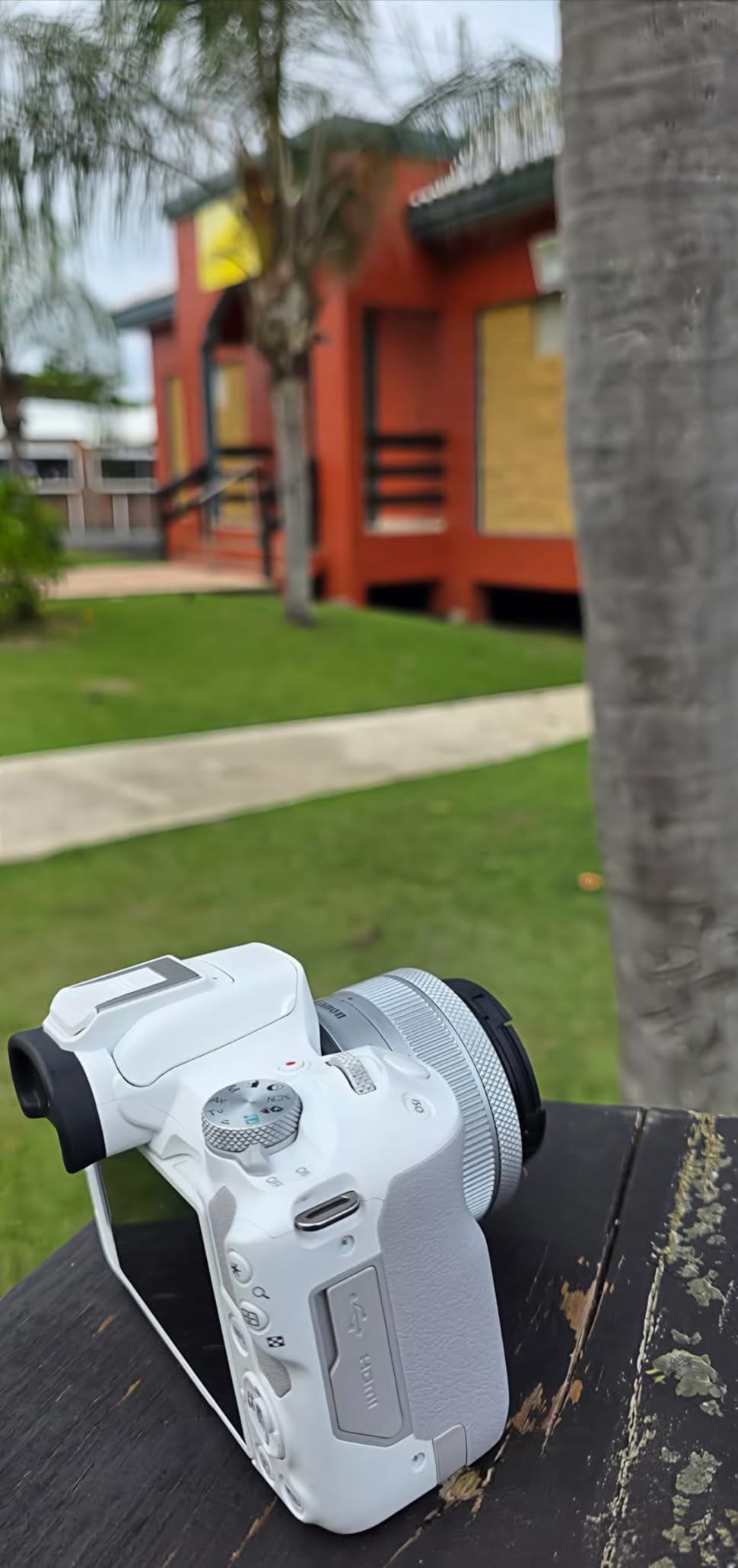
Video is where this body quietly outruns its price bracket. Canon oversamples 4K from 6K with no crop, so a 24mm lens still frames 24mm in your video. The 2.36-million-dot EVF at 0.96x magnification is small but adequate, and the 3-inch vari-angle touchscreen swings around for front-facing work.
Owners consistently describe it as a compact workhorse that suits beginners and working photographers equally, with painless phone transfer being a repeated highlight. If you want a step up in handling, our camera cage roundup covers grips that solve the small-hand problem properly.
The trade-off we hear most is the grip. At 16 ounces it is genuinely pocketable, but reviewers with larger hands report accidental button presses and recommend an added grip. The bundled RF-S 18-45mm f/4.5-6.3 IS STM is a serviceable travel lens that most owners replace within a year.

Who the Canon EOS R50 suits
This is the body for a first serious camera, a travel kit, or a lightweight second body for events. At 16 ounces with a pancake lens it disappears into a small bag, and the autofocus means you can hand it to a less experienced shooter at a reception and still get usable frames back.
For hybrid work, the uncropped 4K and the ability to stream over USB make it a serviceable content camera as well. If you move between stills and video constantly, our guide to gimbals for mirrorless cameras covers stabilising it for moving shots.
Who should skip the Canon EOS R50
Skip it if low light is your primary environment and you cannot accept a crop sensor. Reception lighting is exactly where APS-C bodies show their limit, and the small battery means spares for any long day. If you are wedding-only, budget for a second battery and read our wedding camera guide before committing.
Also skip it if the tiny grip bothers you to the point of distraction. Try one in person if you can, because a body you dislike in the hand gets left behind at home.
2. Sony Alpha a6400 – The Best Mirrorless Camera for Eye Autofocus
Sony Alpha a6400 Mirrorless Camera: Compact APS-C Interchangeable Lens Digital Camera with Real-Time Eye Auto Focus, 4K Video, Flip Screen & 16-50mm Lens – E Mount Compatible – ILCE-6400L/B, Black
20.1MP stacked APS-C sensor
425 phase-detect points over 84%
11 fps with tracking
16-50mm kit lens included
Pros
- Real-Time Eye AF that reviewers call transformative for kids and pets
- Sharp results that hold up years into ownership
- 10.3-ounce body that fits a small bag with two lenses
- 180-degree swivel screen for self-recording
- Sharpening affordable third-party E-mount glass
Cons
- No in-body stabilization
- Thin native Sony APS-C lens lineup
- Menu system and control app criticized as unintuitive
- Kit 16-50mm is weak indoors
Long-term owners of the a6400 keep reporting the same thing: after tens of thousands of shots it still performs alongside bodies released years later. The 20.1MP stacked back-illuminated Exmor RS sensor was advanced when it launched and the eye autofocus remains the reason most people buy it.
425 phase-detect points cover 84% of the frame, and Real-Time Eye AF holds on faces, pets and now vehicles. At 11 fps with continuous AF/AE tracking you can run a burst through a dance floor and still get a usable sequence. For anyone shooting kids or events, that reliability is the whole argument for this body.

The 16-50mm kit lens covers 24-75mm equivalent, which is a sensible everyday range but stops down to f/3.5 at the wide end. In a dim reception that is the limiting factor, not the body. The 180-degree tilting 3-inch touchscreen rotates far enough for vlogging and self-recording.
The specification that gets least attention is 14-bit RAW capture, which gives you noticeably more latitude in post than the megapixel count suggests. Reviewers also point out that 83% of its reviews are five-star, an unusually strong long-term satisfaction signal for a body of this age.

Who the Sony Alpha a6400 suits
This suits shooters who photograph people and cannot afford a missed focus point. It is also the smart buy if you want to add fast third-party glass later, since affordable E-mount options sharpen results dramatically compared with the kit zoom.
Travel and street shooters like the 10.3-ounce weight and the compact kit. At this budget it is also a common second body, which is useful when you already own lenses in the E mount.
Who should skip the Sony Alpha a6400
Skip it if you shoot handheld video in low light or at long focal lengths, because there is no in-body stabilization and stabilization depends entirely on the lens. Sony’s native APS-C lens range is also thin, so telephoto work pushes you toward full-frame glass.
Skip it if you dislike fiddly software. The menu system and the Wi-Fi control app draw repeated criticism, and that friction is real on a first camera. Pair it with a fast prime before the budget is gone and you will be in good shape.
3. Sony ZV-E10 – The Best Mirrorless Camera for Vlogging
Sony ZV-E10 APS-C Mirrorless Camera Body Black
24.2MP APS-C Exmor CMOS
4K oversampled from 6K
Background Defocus button
Single-cable USB streaming
Pros
- 6K oversampled 4K with full pixel readout and clean detail
- One-touch Background Defocus and Product Showcase controls
- Light 12.16-ounce body with a vari-angle screen
- Streams over a single USB cable with no capture card
Cons
- Body only
- no lens included
- Digital stabilization only and no IBIS
- Older sensor and a single SD slot
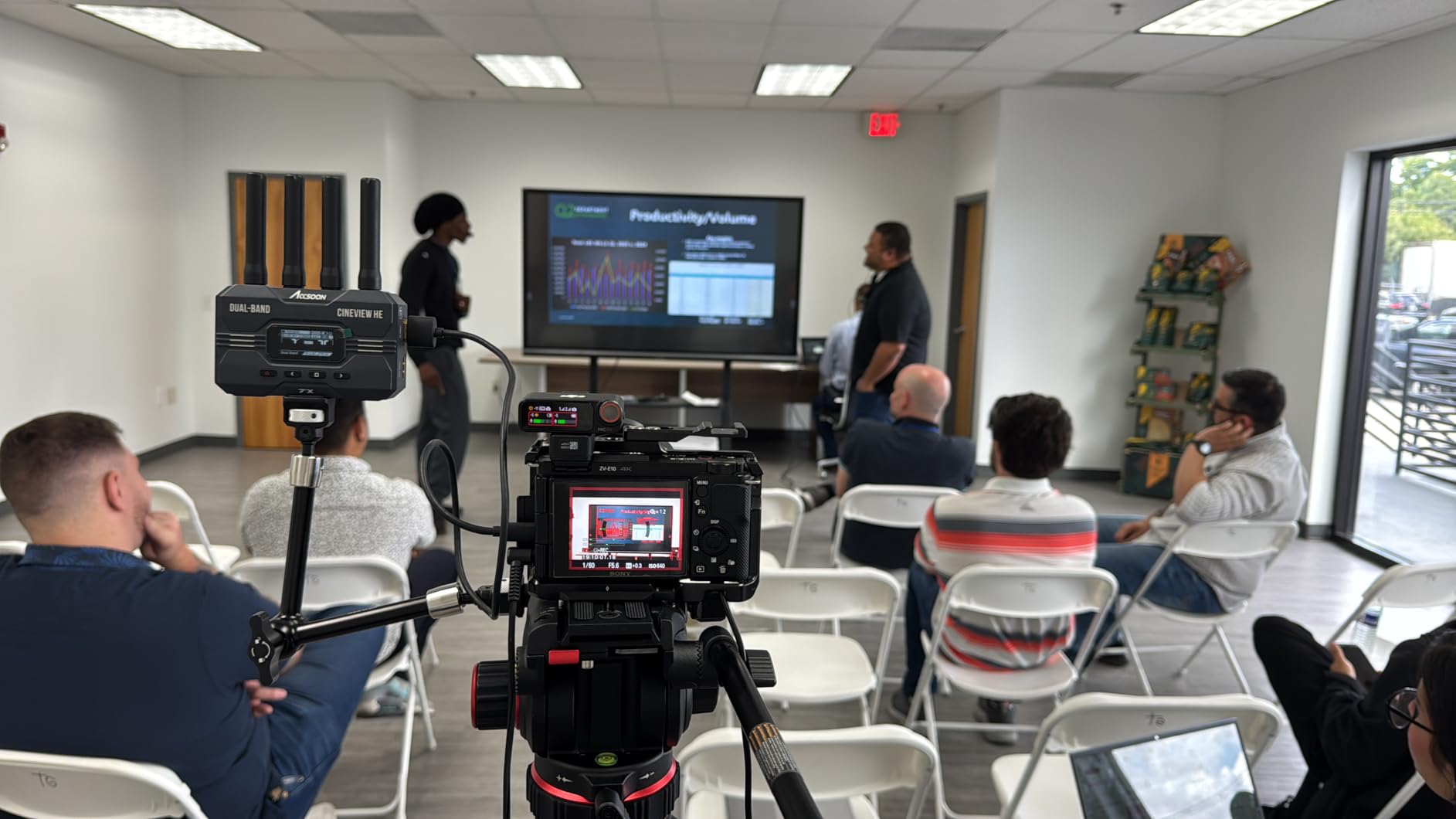
For anyone whose output is video, the ZV-E10 is the obvious choice in this group. The 24.2MP Exmor CMOS sensor with the BIONZ X processor records 4K oversampled from 6K with a full pixel readout, which is the recipe for clean detail and minimal moire in tricky lighting.
The creator features are the reason this exists. A dedicated Background Defocus button instantly ramps up background blur, and Product Showcase mode shifts focus from your face to whatever you hold up to the lens without a manual rack. For a reviewer making product videos, that saves a lot of setup time.

Streaming is genuinely plug and play over a single USB cable, with no capture card and no extra software, and the 3.0-inch 921,600-dot vari-angle touchscreen faces forward for framing yourself. Fast Hybrid AF covers 425 points with Real-Time Eye AF and real-time tracking at 11 fps.
On the photography side it is a competent but ordinary camera. The sensor generation is mature, expanded ISO goes down to 50, and 14-bit RAW is welcome. The 1/4000 second maximum shutter speed is the practical limit at bright daylight.
Who the Sony ZV-E10 suits
It suits vloggers, YouTubers and hybrid shooters who need excellent 4K and a screen that faces forward. It also suits anyone already invested in Sony E-mount glass, since the body pairs with the full lens catalogue including adapted full-frame glass.
For talking-head and walk-and-talk work, the single-cable streaming means you can power the camera from a laptop or power bank for a long session.
Who should skip the Sony ZV-E10
Skip it if you are a stills-first shooter. There is no in-body stabilization, only digital stabilization, so handheld low-light and long-lens work will disappoint. The single SD slot also rules it out for professional event work where a backup card matters.
Skip it if you need a lens in the box. This is a body-only purchase, so a Sigma 18-50mm is the standard companion and it eats into the rest of your budget. The most common advice we see is to buy this body with that one lens and stop spending.
4. Panasonic Lumix G85 – The Best Mirrorless Camera for Video
Panasonic LUMIX G85 4K Digital Camera, 12-60mm Power O.I.S. Lens, 16 Megapixel Mirrorless Camera, 5 Axis in-Body Dual Image Stabilization, 3-Inch Tilt and Touch LCD, DMC-G85MK (Black)
16MP Micro Four Thirds no low-pass filter
5-axis dual image stabilization
Weather-sealed body
12-60mm stabilized lens
Pros
- Class-leading 5-axis dual stabilization steadies handheld 4K
- Weather-sealed body and lens
- rare in this bracket
- 12-60mm kit lens is versatile and stabilized in sync with the body
- Deep manual video tools with mic jack
- peaking and zebras
Cons
- 16MP sensor shows visible noise above ISO 6400
- 4K is cropped and limited to 100Mbps
- Autofocus is adequate rather than class-leading
- Heavier than earlier Lumix bodies
The G85 is the video-first choice, and the reason is stabilization that works in the body. Five-axis dual image stabilization covers stills and 4K together, which means you can walk while filming and get a glide rather than a shake. At this budget almost nothing else offers it.
The 12-60mm f/3.5-5.6 Power O.I.S. kit lens is one of the better bundled zooms, covering 24-120mm equivalent and synchronising its optical stabilization with the body. Reviewers call it unusually capable for a kit, and it means you can start shooting without a second purchase.

You also get a weather-sealed body, a 2,360K-dot OLED eye-level viewfinder and a 3-inch fully articulating 1,040K-dot touch screen. The manual video toolkit includes a microphone jack, peaking, zebras and manual exposure control, and owners note it does not overheat during long 4K sessions.
The trade is the sensor. A 16MP Micro Four Thirds chip with no low-pass filter still produces detailed files, but reviewers consistently report more noise at ISO 6400 and above than APS-C rivals. The crop on 4K and the 100Mbps cap limit the format for professional delivery.

Who the Panasonic Lumix G85 suits
It suits filmmakers who move while they shoot, and anyone working outdoors who wants sealing at this budget. The fully articulating screen and dual stabilization also make it a good fit for documentary and event run-and-gun work.
It is a strong match for travel shooters who value a long stabilized reach in a small kit. Pair it with a compact prime later and it stays in a small bag.
Who should skip the Panasonic Lumix G85
Skip it for stills-first work in dim venues. A 16MP sensor with high ISO noise is the wrong tool for a reception, and the 49-point autofocus system with eye detection is competent rather than class-leading. If your income depends on a room you cannot add light to, this is not the body.
Also skip it if you need uncropped 4K or a high bitrate master. The crop and 100Mbps limit are real constraints, and there is no headphone jack for monitoring.
5. Canon EOS RP – The Best Full-Frame Mirrorless Camera Under Budget
Canon EOS RP Mirrorless Camera (Body Only)
26.2MP full-frame CMOS with DIGIC 8
5 fps burst
Vari-angle touch LCD
Webcam use via clean HDMI
Pros
- 26.2MP full-frame sensor with strong dynamic range and low light capability
- Lightest and smallest full-frame EOS body
- Dependable Dual Pixel CMOS AF for stills and video
- Works as a webcam through EOS Utility Webcam Beta or clean HDMI
Cons
- Body only
- no lens included
- 5 fps burst and a single UHS-II card slot
- 4K is heavily cropped against the stills field of view
- No in-body stabilization
If your heart is set on full frame, the RP is the realistic way into it at this budget. A 26.2MP full-frame CMOS sensor with the DIGIC 8 processor gives you noticeably better dynamic range and cleaner high-ISO files than any APS-C body here, and it is the only full-frame option in this group.
Dual Pixel CMOS AF is fast and dependable for both stills and video, which matters because full-frame at this level is often a compromise on speed. The 3.0-inch vari-angle touch LCD and a 0.70x viewfinder magnification are fine for framing, and the body can double as a high-quality webcam over clean HDMI.

There is a reason it sits at the lower end of full-frame pricing, and the reasons are specific. Five frames per second is slow for a wedding or any action-driven work, there is one card slot with no backup path, and 4K is heavily cropped compared with the stills field of view.
Stabilization is the other compromise. There is no in-body stabilization, so steady shots depend entirely on the RF lens you mount. That makes your lens choice more important here than on the bodies above.

Who the Canon EOS RP suits
It suits portrait and landscape shooters who want the shallow depth of field and dynamic range of full frame without a flagship body. It also suits anyone already holding EF or EF-S glass, since an adapter opens the entire back catalogue.
For travel, the small body is genuinely pocketable with a compact RF lens, and the low light performance is a real step up from crop-sensor alternatives.
Who should skip the Canon EOS RP
Skip it for event and action work. A 5 fps burst and a single card slot are poor insurance on a wedding day, and the heavily cropped 4K limits hybrid shooters. If your income depends on not missing a decisive moment, the R50 is the smarter body at the same money.
Skip it if you shoot handheld video or long lenses. With no in-body stabilization, you will be relying on stabilised glass you may not be able to afford at the same time.
6. OM System OM-D E-M10 Mark IV – The Best Mirrorless Camera for Travel
OM SYSTEM Olympus E-M10 Mark IV Silver Micro Four Thirds System Camera M.Zuiko Digital ED 14-42mm F3.5-5.6 EZ kit 20MP Sensor 5-Axis Image Stabilization 4K Video Wi-Fi
20MP Live MOS Micro Four Thirds
5-axis stabilization up to 4.5 stops
Flip-down selfie mode
1.23x EVF
Pros
- 5-axis in-body stabilization with up to 4.5 stops of compensation
- Ultracompact body with a bright 1.23x viewfinder
- Flip-down monitor with automatic selfie mode
- 16 art filters including an Instant Film look
- Inexpensive mature Micro Four Thirds lens ecosystem
Cons
- Smaller sensor limits low light and cropping latitude
- Contrast-detection autofocus is slower than phase-detect rivals
- Tilting rather than fully articulating screen
The E-M10 Mark IV is the smallest complete kit in this roundup, and for a specific kind of shooter that is the entire point. The 20MP Live MOS sensor is Micro Four Thirds, so the body is genuinely pocketable and the matching M.Zuiko 14-42mm kit lens folds down to almost nothing.
Five-axis sensor-shift stabilization delivers up to 4.5 stops of compensation, applying to both stills and video. That figure is what lets you shoot at shutter speeds a few steps slower than you think you should, which is exactly the situation in a dim venue with a group photo.

The creative side is unusually strong for the money. Sixteen art filters across 31 types, including a nostalgic Instant Film look, give you a finished frame without editing. The 3-inch 1,040,000-dot screen tilts and flips down into an automatic selfie mode, and the 1.23x EVF is bright and clear for its size.
Autofocus is the honest weak point. It is 121-point contrast detection, which is reliable on a static subject in good light and noticeably slower when a person moves toward you. Rapid bursts also mean 15 fps sequential or 8.7 fps in RAW.
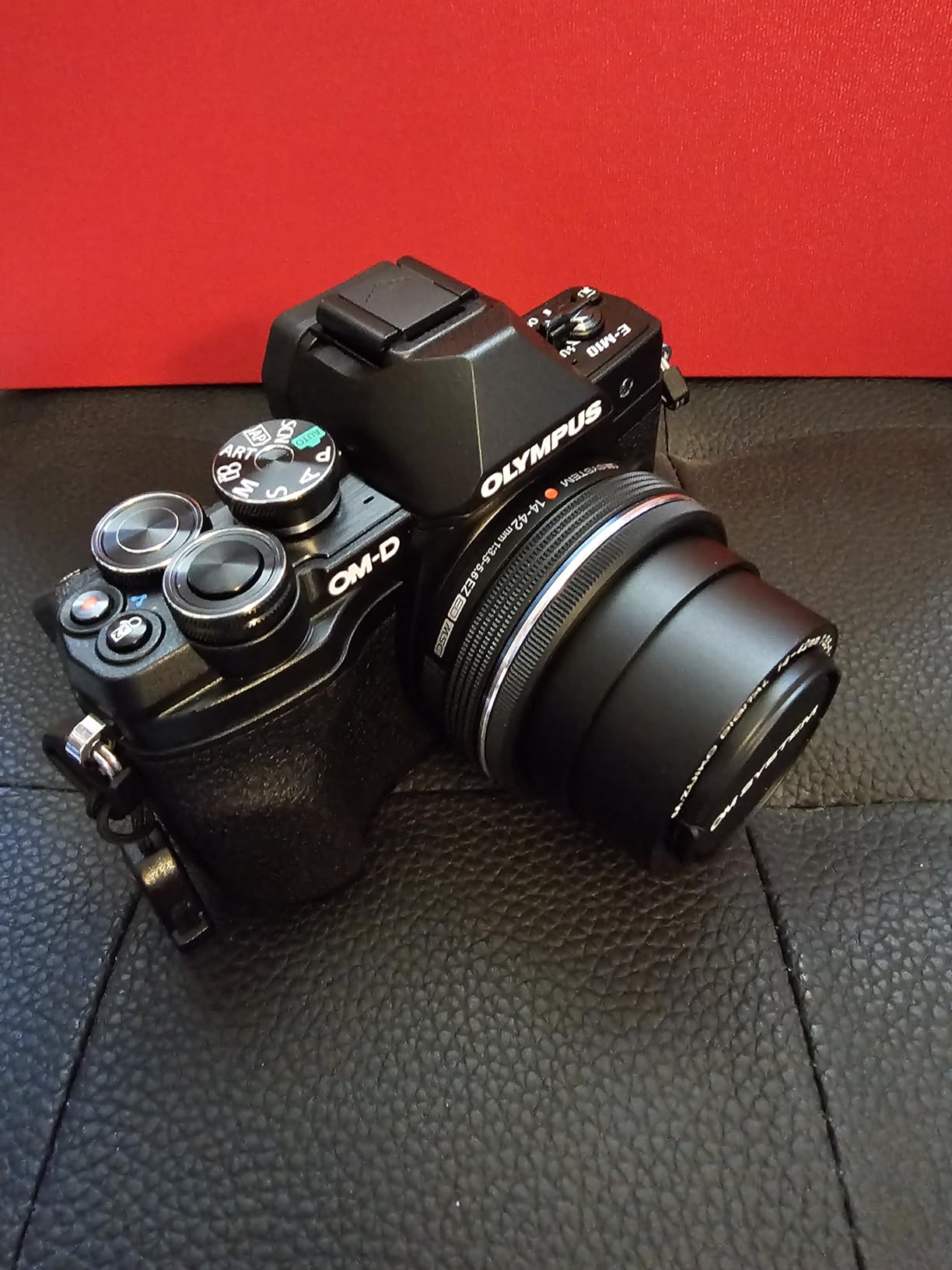
Who the OM System OM-D E-M10 Mark IV suits
It suits travel and street shooters who want a camera that disappears into a bag, and anyone who values in-body stabilization more than resolution. The bright viewfinder in a body this size is unusual and genuinely pleasant to use.
It is also a good first camera for someone who shoots mostly in daylight and wants film-style looks without opening editing software. If you like the Micro Four Thirds format, our vintage lens guide has affordable manual glass options for this mount.
Who should skip the OM System OM-D E-M10 Mark IV
Skip it for weddings and events. Contrast-detection autofocus that lags behind phase-detect rivals is a poor match for moving subjects, and the smaller sensor leaves you less room when you push ISO. There is no weather sealing either, which matters in bad weather.
Skip it if you need to crop hard or shoot large prints. The Micro Four Thirds crop is severe, so a 70mm-equivalent view takes roughly 140mm of reach, and the low light ceiling arrives earlier than on APS-C.
7. Canon EOS M50 Renewed – The Lowest-Cost Way Into a Canon Mirrorless System
Canon EOS M50 Mirrorless Camera Kit w/EF-M15-45mm and 4K Video (Black) (Renewed)
24.1MP APS-C CMOS, ISO up to 51200 expanded
143-point Dual Pixel AF with Eye Detection
4K 24p and 120p HD
15-45mm lens included
Pros
- Sharp 24.1MP APS-C files at the lowest entry cost in this group
- Eye Detection AF handles people and static subjects well
- EF-M and adapted EF and EF-S lenses keep the system flexible
- Complete kit including a stabilized zoom lens
Cons
- Renewed condition means previous wear and a 90-day limited warranty
- 4K limited to 24 fps with additional cropping
- No in-body stabilization
- Older sensor and AF system trail newer bodies in tracking
The renewed M50 is the cheapest way in this list to own a real Canon mirrorless camera with a lens in the box, and for a strict budget that matters. The 24.1MP APS-C sensor with ISO expandable to 51200 produces files that hold up on a decent screen, which is most of what a first camera needs.
Dual Pixel CMOS AF with Eye Detection and 143 points is quick on people and perfectly fine on static subjects. The bundled EF-M 15-45mm f/3.5-5.6 IS STM covers 24-72mm equivalent and is stabilised, and adapted EF and EF-S glass keeps the door open if you outgrow it.

Being honest about the condition is important. This is a Renewed unit, so it carries visible wear, and the warranty is a 90-day limited warranty rather than a full year. Reviewers who bought renewed treat that as the price of the discount and report no functional issues.
The feature limits are real too. 4K recording is 24 fps only with additional cropping, there is no in-body stabilization, and the sensor generation trails current bodies in tracking speed. It is a camera you learn on, not one you build a business on.

Who the Canon EOS M50 Renewed suits
It suits a first-time buyer with limited funds who wants a complete working kit on day one rather than saving up for a lens. Students and younger shooters often start here and move up once they know what they want to shoot.
It also suits anyone who wants a second body purely as a backup and does not want to think about condition, because the price gap is large.
Who should skip the Canon EOS M50 Renewed
Skip it if you need 4K at a usable frame rate or any stabilisation. 24 fps cropped 4K is a limitation you will notice immediately in 2026. Professional work also rules it out, because a renewed warranty and an older AF system are not what you want on a paid shoot.
Skip it if you plan to grow fast into demanding work. The 2018-generation sensor and 143-point AF will feel dated within a year, and you will change bodies rather than lenses.
8. Nikon Z 30 – The Best Mirrorless Camera for Handling
Nikon Z 30 with Wide-Angle Zoom Lens | Our most compact, lightweight mirrorless stills/video camera with 16-50mm zoom lens | Nikon USA Model
20.9MP DX sensor with no AA filter
Uncropped 4K with no recording limit
Flip-out selfie monitor
11 fps burst
Pros
- Grip and dial layout widely praised as the best in class
- 4K recorded without crop and with no recording time limit
- No anti-aliasing filter so detail is unusually crisp
- Plug-and-play Full HD 60p streaming over USB-C
- Smallest and lightest Nikon Z body
Cons
- No viewfinder
- so framing relies on the screen
- No built-in flash and no microphone jack
- Lens-based VR only with no in-body stabilization
- Single UHS-I card slot
Nikon’s ergonomics are the reason this body keeps coming up. The grip, the dial placement and the general shape of the camera feel like an extension of a full-size Nikon, and at 12.32 ounces it still disappears into a bag. For a first camera, handling often matters more than the spec sheet.
The 20.9MP DX-format sensor has no anti-aliasing filter, which makes it sharper on fine detail than filtered competitors. Hybrid AF with 209 points and 273 phase-detection points covers the frame with eye detection for people and pets, and burst runs at 11 fps.
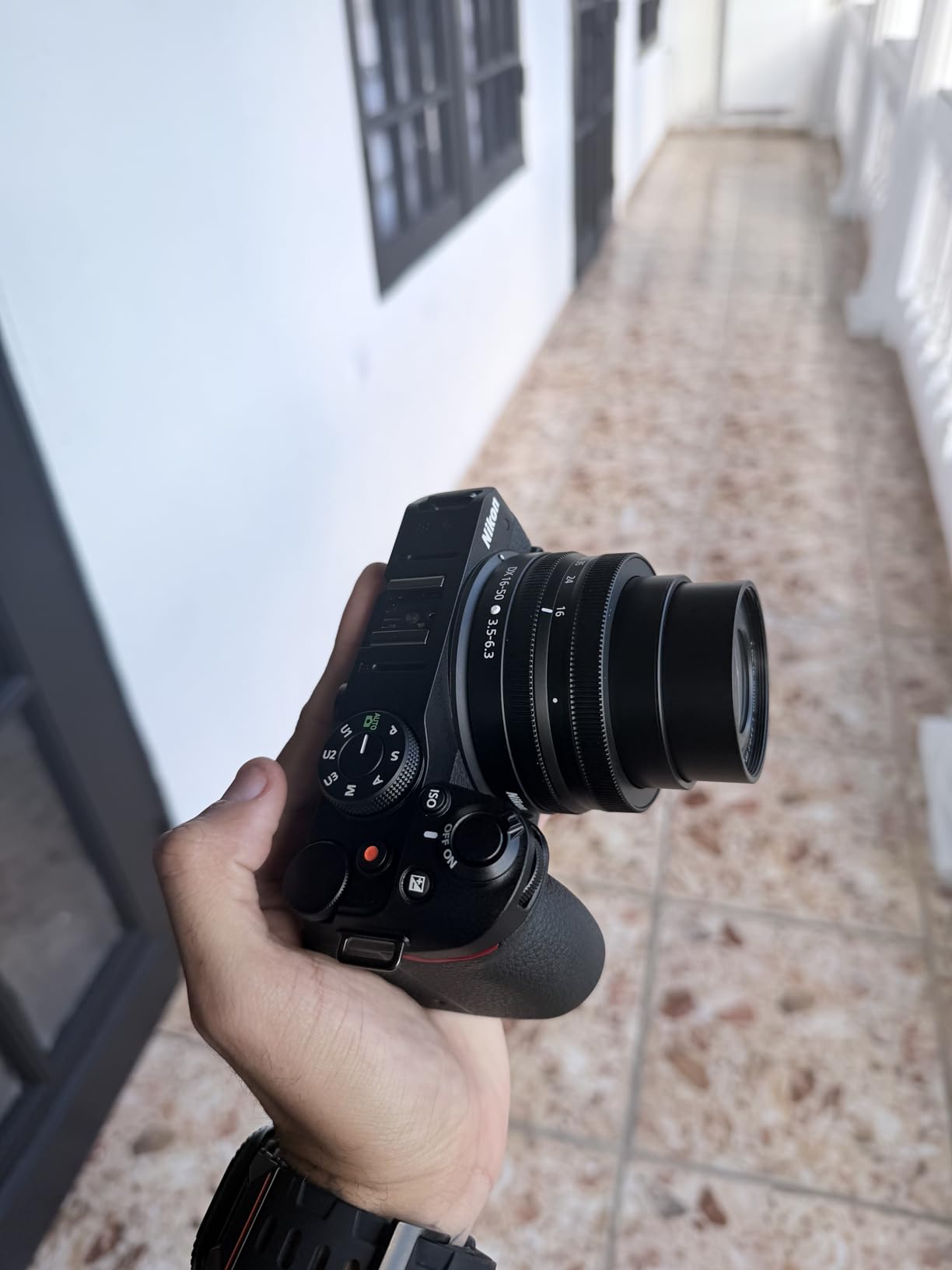
Video is where it separates from the Z 50. The 3-inch 1,040k-dot flip-out touchscreen is a proper selfie monitor, 4K UHD 30p is recorded with no crop and no recording time limit, and Full HD 60p streaming over USB-C is genuinely plug and play with constant power from the cable.
There is a built-in stereo microphone with adjustable sensitivity and a red recording light, which is a small touch that matters when you are filming alone. The 16-50mm f/3.5-6.3 VR kit lens covers 24-75mm equivalent.
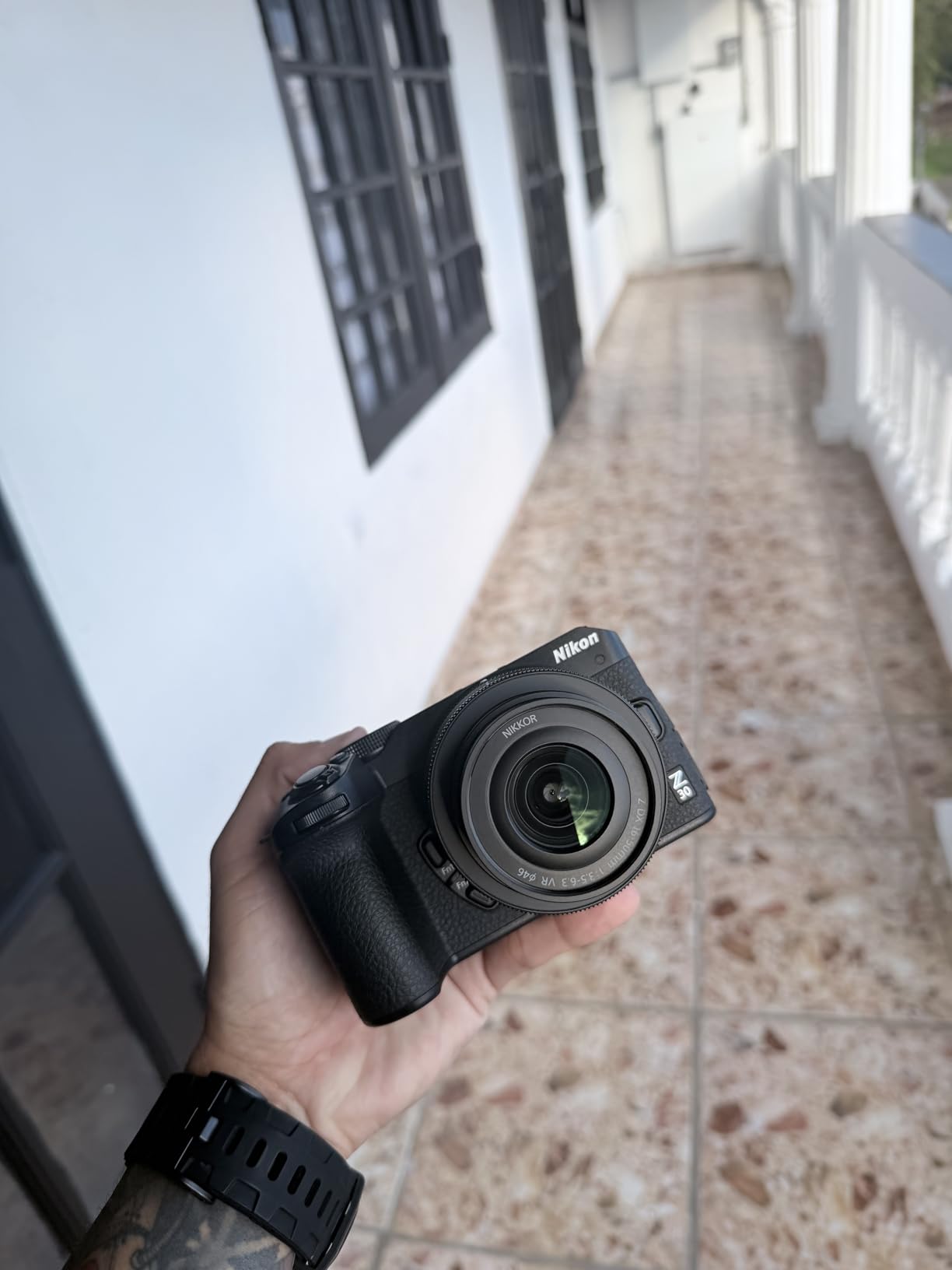
Who the Nikon Z 30 suits
It suits content creators and vloggers who want a screen that faces forward and 4K without a crop. The USB-C streaming with constant power is a genuine advantage for long sessions, and the handling makes it pleasant to carry all day.
It also suits travel shooters who want Nikon colours and a body that fits a coat pocket. If you already own F-mount glass, the FTZ adapter opens a large catalogue.
Who should skip the Nikon Z 30
Skip it if you shoot in bright daylight. There is no viewfinder, so framing depends entirely on the screen, and the absence of a built-in flash is a genuine gap outdoors. The single UHS-I slot is also a limitation for professional work.
Skip it for handheld video or long lenses. Stabilization is lens-based VR only, with no in-body compensation, so a stabilised lens on this mount costs more than the body did.
9. Sony Alpha a6100 – The Best Mirrorless Camera for Action
Sony Alpha A6100 Mirrorless Camera, Black
24.2MP APS-C Exmor sensor
0.02s Real-Time AF, 425 points
11 fps RAW with tracking
4K UHD with mic jack
Pros
- 0.02-second autofocus with Real-Time Eye AF for people and animals
- 11 fps burst with AF and AE tracking
- Touch Tracking holds focus on a tapped subject
- 4K UHD with a microphone input for audio
- Touchscreen tilts 180 degrees for self-recording
Cons
- Body only
- no lens included
- No in-body image stabilization
- Older menu system than newer Sony bodies
- Modest battery life
The a6100 is built around speed. The 24.2MP Exmor sensor with a front-end LSI is paired with 0.02-second autofocus across 425 phase-detect and 425 contrast-detect points covering 84% of the frame, with Real-Time Eye AF for humans and animals.
That speed is what makes it good for action. At 11 fps with AF and AE tracking you can hold focus through a moving subject, and Touch Tracking locks focus to whatever point you tap on the screen and then follows it, which is genuinely useful when a child and a dog are both in the frame.
ISO goes up to 51,200 on paper and RAW files are 14-bit, giving you room to lift shadows. The 3-inch 921,600-dot screen tilts 180 degrees, and 4K UHD recording accepts a microphone through a dedicated jack, which is rare at this level.
The box includes an NP-FW50 battery, charger, USB cable, body cap and strap, so you can shoot immediately. Viewfinder magnification is 0.70x, which is modest but usable for framing.

Who the Sony Alpha a6100 suits
It suits anyone photographing sport, kids or events where focus speed is the deciding factor. It is also a good value entry to the E mount if you plan to add lenses later, since the same body handles both APS-C and full-frame glass.
For hybrid shooters, the mic jack and the tilting screen cover the two gaps that trip up most entry-level bodies at this budget.
Who should skip the Sony Alpha a6100
Skip it if you shoot handheld video or very low light. There is no in-body stabilization, and the battery is modest, which means planning spares into an already tight budget. The menu system also feels dated against newer Sony bodies.
Skip it if you want a lens in the box. This is a body-only listing, so a large part of your budget has to go on glass before you take a photograph.
10. Nikon Z 50 – The Best Nikon Starter Under Budget
Nikon Z 50 with Wide-Angle Zoom Lens | Compact mirrorless Stills/Video Camera with 16-50mm Lens | Nikon USA Model
20.9MP DX-format CMOS
209-point hybrid AF with eye detection
4K UHD and 1080p 120p
55mm Z mount with FTZ access
Pros
- Compact 585g body that still fits a coat pocket
- 4K UHD plus 1080p 120p slow motion with clean HDMI and mic jack
- 209-point hybrid AF with good eye detection
- Battery and charger included and chargeable over USB
- FTZ adapter opens existing F-mount NIKKOR glass
Cons
- No in-body stabilization
- single UHS-I SD slot and Micro-USB
- Proprietary EN-EL25 battery
- 20.9MP DX sensor has less high ISO latitude than full frame
The Z 50 is the low-friction way into the Z system. Owners highlight the compact 585g body and lens combination, which still fits a coat pocket, along with sharp results and the colour science Nikon is known for.
Autofocus is a 209-point hybrid phase-detect system with eye detection covering most of the frame, and burst runs at 11 fps. For portraits and family photography that is more than sufficient, and eye detection handles the common case of a child moving toward the camera.
Video covers 4K UHD and 1080p at 120 fps for slow motion, with clean HDMI out and a mic jack. The 3.2-inch flip-down touch LCD enters selfie mode when flipped, which is a small but useful feature for self-recording.
There is a real advantage in the 55mm Z mount width. It is the first DX body on that mount, and the FTZ adapter gives you access to existing F-mount NIKKOR glass, so a system already in your drawer is not wasted.
Who the Nikon Z 50 suits
It suits beginners who want a small, friendly camera with modern autofocus and a mount that leaves room to grow. Portrait and family shooters get accurate colours and reliable eye detection without a large body.
It also suits anyone upgrading from an older Nikon DSLR who already owns F-mount lenses, because the FTZ adapter keeps that glass useful.
Who should skip the Nikon Z 50
Skip it if you need modern connectivity ports. It uses Micro-USB rather than USB-C, which matters for streaming and charging workflow, and the single UHS-I slot has no backup path for paid work.
Skip it for handheld long-lens or low-light work. There is no in-body stabilization, and the DX sensor has less latitude than full frame when you push ISO in a dim reception. The EN-EL25 battery is also proprietary, so older Nikon batteries do not fit.
11. Canon EOS R100 Bundle – The Best Complete Starter Package
Canon EOS R100 Mirrorless Camera with RF-S 18-45mm Lens Bundle
24.1MP APS-C with DIGIC 8
143-zone Dual Pixel AF
6.5 fps electronic burst
Bundle adds 64GB card and bag
Pros
- Sharp vibrant files with reliable colour
- Simplified menus and auto scene modes for beginners
- Bundle includes a 64GB card and camera bag so it works out of the box
- Lightweight compact body that is easy to travel with
- 143-zone Dual Pixel AF tracks people and faces quickly
Cons
- 4K capped at 24 fps and heavily cropped
- No in-body stabilization
- Fixed rear screen
- 6.5 fps burst and a single UHS-I SD slot
The R100 bundle is the lowest-friction entry in this roundup, and for someone handing a camera to a family member that is worth something. The 24.1MP APS-C sensor with the DIGIC 8 processor produces sharp, vibrant files with colour you can trust without editing.
It comes with the stabilized RF-S 18-45mm f/4.5-6.3 IS STM lens, a 64GB memory card and a camera bag, so there is nothing else to buy on day one. The interface is simplified with auto scene modes, and Dual Pixel CMOS AF across 143 zones tracks faces and people quickly.
A 2.36m-dot OLED EVF is a genuine positive, because many cheaper bodies at this tier drop the viewfinder entirely and force you to shoot on the screen. That matters in bright daylight, where a screen is hard to see.
The limits are clear and reviewers name them consistently. 4K is capped at 24 fps with a heavy crop, there is no in-body stabilization, the 3-inch rear screen is fixed rather than articulating, and the burst rate is 6.5 fps on the electronic shutter.

Who the Canon EOS R100 Bundle suits
It suits first-time buyers, students and anyone who wants a complete working package without thinking about compatibility. The viewfinder and the beginner-oriented menus make it a calm camera to learn on.
It suits travel and everyday shooting, where the light body and the included stabilized lens cover most situations without extra spending.
Who should skip the Canon EOS R100 Bundle
Skip it if you shoot video. Cropped 24 fps 4K and a fixed screen are both disqualifying for a creator, and the fixed screen in particular rules out low-angle and front-facing work.
Skip it for professional use. A 6.5 fps burst and a single UHS-I slot are weak for paid work, and the limited controls mean you will outgrow the camera quickly. Longstanding buyer sentiment treats the entry Canon tier as a stepping stone rather than a destination.
12. Fujifilm X-M5 – The Best Mirrorless Camera for Film Simulations
FUJIFILM X-M5 Mirrorless Digital Camera XC15-45mmF3.5-5.6 OIS PZ Lens Kit – Black
26.1MP X-Trans 4 APS-C sensor
20 film simulations, 8 on a top dial
425-point AF with subject recognition
6K video, 12.5 oz body
Pros
- 26.1MP X-Trans 4 sensor with outstanding detail and colour
- Twenty film simulations give finished looks without editing
- Smallest and lightest X-series body at 12.5 oz
- 425-point AF with AI subject recognition
- 6K video capture
Cons
- Street price sits above the 1000-dollar budget
- No built-in flash and no in-body stabilization
- Fujifilm app transfers connect unreliably
- Flipping rather than tilting screen
- Limited XF lens selection versus Canon
- Nikon and Sony
The X-M5 is chosen for colour rather than specifications. The 26.1MP X-Trans 4 CMOS sensor is the same one found in the acclaimed X100V, and the X-Processor 5 drives a 425-point autofocus system with AI-based subject recognition, a clear step up from earlier X bodies.
Twenty film simulations, with eight reachable from a dedicated top dial, produce finished-looking JPEG files without any editing. Owners consistently describe the colour and low light behaviour as outstanding for the format, and the rangefinder-style top dials make adjusting exposure genuinely pleasant with gloves on.

At 12.5 ounces it is the lightest body in this roundup, and 6K video recording plus creator-focused modes serve anyone making content. The XC 15-45mm f/3.5-5.6 OIS PZ kit lens gives you a stabilised three-times zoom from day one.
Two things to be straight about. Its street price currently sits above this budget ceiling, so treat it as a stretch pick rather than a sub-1,000 option. There is also no built-in flash and no in-body stabilization, and the screen flips rather than tilts.

Who the Fujifilm X-M5 suits
It suits street and travel shooters who want character in the file without a post-processing habit, and anyone who prefers physical dials to menu diving. The small body makes it a strong everyday carry.
It also suits hybrid shooters who want 6K capture in a compact body, and it pairs well with affordable manual glass if you enjoy working close to the sensor.
Who should skip the Fujifilm X-M5
Skip it on price grounds if this is a hard 1,000-dollar ceiling, because the street price is above it today and the review base is still small at 37 ratings. Skip it for events too, since the battery is quoted at about two hours of average life and there is no flash.
Skip it if you shoot handheld video or low light, since there is no in-body stabilization, and skip it if reliable phone transfer matters, because the Fujifilm app is repeatedly reported to connect unreliably.
How to Choose a Mirrorless Camera Under $1000 Budget?
Sensor format is the first decision, and it sets everything else. Full frame gives you the best dynamic range and low light performance but costs the most, APS-C is the sweet spot for most buyers, and Micro Four Thirds keeps bodies and lenses small while demanding a crop you have to plan around. A full-frame body under this budget is possible, as the Canon RP shows, but you compromise elsewhere.
Autofocus matters more than resolution. A 24MP sensor with reliable subject detection beats a higher-resolution body that hunts in dim light, and the single most cited regret on entry-level cameras is focus that fails exactly when the moment matters. Check whether eye detection covers people, animals and vehicles before you buy.
In-body stabilization is what allows you to shoot at shutter speeds several stops slower than instinct says you should. For indoor events, long lenses and handheld video, it is the difference between a usable frame and a blurred one. Only the Lumix G85 and the OM-D E-M10 Mark IV offer it in this group.
Decide body only or kit. A kit gets you shooting immediately, and on the Canon and Nikon bundles the included lens is perfectly serviceable. Body-only lets you buy a fast prime instead, which is what most photographers would rather do with the same money. We have flagged which is which in every entry above.
Look at the lens ecosystem before the body. Canon RF, Sony E and Nikon Z all have strong third-party support, which matters when your budget covers one lens. Micro Four Thirds has a mature, inexpensive catalogue, and Fujifilm’s XF selection is the narrowest of the four.
Used vs New: Getting More Camera for the Same Budget
Longstanding buyer consensus favours a slightly older mid-range body over a brand-new entry model. The reasoning is simple: a used body with better autofocus and stabilization will outlast a new one with a fixed screen, and the money you save goes straight into a lens you will actually use.
Where to buy matters as much as what you buy. Established used retailers such as KEH and MPB grade condition and return cameras with a warranty, which removes the biggest risk, while marketplaces carry more variety and more risk. Always check the shutter count, look for fungus or haze in the lens, and confirm there is no sensor dust or sticky shutter.
Two things to weigh. A body with a mechanical single card slot and no stabilisation is cheap partly because of what it cannot do, and used condition is harder to judge on an unfamiliar camera. A renewed unit with a short warranty sits in the middle ground, as the Canon EOS M50 listing on this list shows.
Switching From a DSLR Without Rebuilding Your Lens Kit
Switching from a DSLR is the most common upgrade path, and the fear of wasting an existing lens bag is the biggest reason people hesitate. The good news is that most of these mounts can adapt older glass.
Canon EF and EF-S lenses adapt to the Canon RF mount with an inexpensive adapter, which is why the RP is a practical upgrade path for a long-standing Canon shooter. Nikon F-mount lenses work on the Z mount through the FTZ adapter, which the Z 50 and Z 30 both support. Sony E-mount bodies cover the largest range of adapted vintage glass on the market.
Micro Four Thirds is different. Adaptors exist for older Four Thirds DSLR lenses, but the older optics are noticeably slower, so budget for at least one modern compact prime rather than rebuilding entirely from adapters. Our vintage lens buying guide covers what to look for when adapting.
Frequently Asked Questions
What is a good camera for photography under $1000?
The Canon EOS R50 is our pick for a good camera under this budget, because the 24.2MP APS-C sensor, full-frame subject-detection autofocus and 6K oversampled 4K video cover stills and video in a body that weighs 16 ounces. The Sony Alpha a6400 is the alternative if reliable eye autofocus matters more to you.
What is the best mirrorless camera on a budget?
On a strict budget, prioritise autofocus reliability and lens cost over resolution. The Canon EOS R50 includes a usable 18-45mm lens so you can shoot immediately, while cheaper bodies often arrive body-only and push the real cost well past the sticker figure. Adding one fast prime early makes a bigger difference to your photographs than extra megapixels.
What is the best used mirrorless camera for under $1000?
A slightly older mid-range body is the best-value used purchase at this budget, since it brings better autofocus and stabilization than a new entry model. Graded used retailers such as KEH and MPB are the safest route because condition is documented and a warranty applies. Check shutter count, sensor dust and sticky shutter before you commit.
What is the best quality camera under $1000?
For outright image quality, the Canon EOS RP is the strongest option because its 26.2MP full-frame sensor delivers cleaner high-ISO files and wider dynamic range than every crop-sensor body in this roundup. The trade-offs are a 5 fps burst, a single card slot, cropped 4K and no in-body stabilization.
Should I buy a used or new camera under $1000?
Buy new if this is your first camera and you want a full warranty and no condition risk, in which case a bundle that includes a lens or memory card is the sensible choice. Buy used if you already know what you want to shoot, since the same money buys a better body and a fast prime, which is a combination most new entry kits cannot match.
Our Final Recommendation for 2026
For most people, the Canon EOS R50 is the right answer. It gives you the most complete package in this roundup: strong autofocus, excellent 4K, a viewfinder, a vari-angle screen and a usable lens in the box, all inside a body you can carry all day. That is the balance we look for in a first camera and the one we recommend most often.
Shoot events and choose the body that refuses to miss focus, which means the Sony Alpha a6400 or the Sony Alpha a6100, and buy fast glass with the remainder of the budget. Make video and the Panasonic Lumix G85 gives you stabilisation nobody else at this price can match. Want full frame and the Canon EOS RP is still the practical way in.
Whatever you pick, spend the leftover budget on one good lens rather than holding off. A fast prime changes your photographs more than any upgrade to the body, and it is the change you will notice every time you raise the camera.